As we approach World Mental Health Day this October 10th, we’re reminded that mental health is universal, but the way we understand and talk about it is deeply shaped by culture.
Across the world, people experience stress, grief, anxiety, trauma, and emotional challenges. Yet the way we respond can look very different. In some cultures, mental health struggles are openly discussed and supported through community, family, spirituality, or traditional practices. In others, seeking professional help may carry stigma or be viewed as a private family matter.
In America, counseling is increasingly recognized as an important part of mental health care. Speaking with a counselor can provide a safe, confidential space to process emotions, understand challenges, develop coping strategies, and work toward meaningful change.
But counseling isn’t one-size-fits-all.
America is home to people from countless cultures, backgrounds, languages, and traditions. Effective counseling means understanding that a person’s cultural values, family dynamics, beliefs, and experiences can influence how they view mental health and asking for help.
Culturally responsive counseling meets people where they are.
This World Mental Health Day, let’s challenge the idea that asking for help is a weakness. Whether support comes from a counselor, trusted friend, family member, faith community, or another source, reaching out can be an important step toward well-being.
🌎 Different cultures. Different perspectives. One shared human experience.
Mental health matters—and everyone deserves a space where they feel heard, respected, and understood.
Anxiety and depression are among the most common mental health struggles in today’s world, affecting people across all ages, backgrounds, and even faith communities. For Christians, these struggles can sometimes bring confusion or guilt—leading questions like, “Why am I feeling this way if I have faith?”
The truth is that emotional suffering is not a lack of faith. Throughout Scripture, we see faithful people—David, Elijah, Job, and even Paul—who experienced deep emotional distress. Christian counseling offers a way to integrate biblical truth with psychological care, helping individuals find healing, stability, and hope.
This article explores biblical ways to manage anxiety and depression while also recognizing the importance of practical mental health support.
1. Bring Your Anxiety to God in Honest Prayer
The Bible repeatedly encourages believers to bring their burdens directly to God.
“Cast all your anxiety on Him because He cares for you.” – 1 Peter 5:7
Honest prayer is not about pretending everything is okay. It is about expressing fear, sadness, confusion, and exhaustion openly before God.
Practical Application:
Pray with honesty, not performance
Journal your prayers when emotions feel overwhelming
Use Psalms as guided prayers (especially Psalms 23, 34, 42, 55)
2. Renew Your Mind with Scripture Truth
Anxiety often grows through repeated negative thought patterns. Scripture helps reframe those thoughts with truth.
“Do not be conformed to this world, but be transformed by the renewing of your mind.” – Romans 12:2
Write 3 verses on index cards and revisit them daily
Replace catastrophic thoughts with truth-based affirmations
3. Practice Peace Through Prayer and Surrender
Philippians 4 gives a clear framework for managing anxious thoughts:
“Do not be anxious about anything… but in every situation, by prayer and petition, present your requests to God.” – Philippians 4:6–7
This passage does not deny anxiety—it redirects it.
Practical Application:
Use a “worry-to-prayer” method: every worry becomes a prayer request
Set aside a daily “surrender moment” to release control to God
4. Seek Wise Counsel and Community Support
Scripture emphasizes wisdom in counsel:
“Where there is no guidance, a people falls, but in an abundance of counselors there is safety.” – Proverbs 11:14
Christian counseling combines spiritual truth with mental health tools to address anxiety and depression in a holistic way.
Why this matters:
Emotional struggles often require support beyond personal prayer
Isolation can intensify depression
Professional counseling helps identify thought patterns, trauma, and stress triggers
5. Care for Your Body as Part of Spiritual Stewardship
Mental health is closely tied to physical health. The Bible teaches that the body is important and should be cared for.
Key areas to focus on:
Sleep consistency
Nutrition and hydration
Movement (walking, stretching, exercise)
Reducing overstimulation (especially digital overload)
Practical Application:
Even small steps—like a 10-minute walk or reducing screen time—can significantly improve mood and clarity.
6. Replace Isolation with Healthy Connection
Depression often grows in isolation, while healing often happens in community.
“Two are better than one… if either of them falls, one can help the other up.” – Ecclesiastes 4:9–10
Practical Application:
Stay connected to trusted friends or church members
Join a small group or Bible study
Be honest about struggles with safe people
7. Understand That Healing Is a Process, Not an Instant Fix
Faith does not always remove struggles instantly—but it provides strength through them.
Even biblical figures experienced seasons of despair:
David expressed deep emotional pain in the Psalms
Elijah asked God to end his life during burnout (1 Kings 19)
Paul described ongoing internal struggles (2 Corinthians 1)
Key takeaway:
Healing often happens gradually through:
Prayer
Counseling
Support systems
Time and restoration
When to Seek Christian Counseling
You may benefit from professional support if you experience:
Persistent sadness or hopelessness
Panic attacks or intense anxiety
Difficulty functioning in daily life
Emotional numbness or withdrawal
Overwhelming guilt or shame
Christian counseling provides a safe space to integrate faith with evidence-based emotional care.
Conclusion
Managing anxiety and depression as a Christian involves both spiritual practices and practical mental health care. God does not call you to suffer alone or silently. Instead, Scripture consistently points to peace, support, wisdom, and restoration.
You are not weak for struggling—you are human. And healing is possible through faith, support, and consistent care.
During these unprecedented times, we have had to find creative ways to continue to keep our lives moving as normally as possible. Oftentimes these creative innovations feel like more of a disappointment or hassle, especially compared to the ease of our traditional normalcy. But in this new normal, we may find that there are some advantages to doing some things differently. In terms of healthcare, specifically counseling and therapy, many patients have chosen to move their traditional appointments to the comfort of their own home.
Telehealth is how we do healthcare virtually. It simply takes a device, such as a phone, laptop, or tablet, and a portion of your day. You are able to video chat with your healthcare provider, or in the case of counseling, your therapist, or perhaps simply chat via an audio call. In short, it is up to you!
If you are not used to living your life or doing things virtually, this may seem like a challenge to you, but it actually can come with many surprising benefits.
PRIVACY
While all counseling and therapy sessions are private, (here at Hope Connection, we are HIPPA compliant), the first advantage of Telehealth is that it provides you with an additional layer to your privacy. Not only will your session be confidential, but you also do not have to leave your home and be in a public place, leading up to that session. If you are a first time therapy goer, or would like to keep the fact that you are in counseling a discreet aspect of your life, this may be a benefit of Telehealth to your therapy process.
COMFORT
When you come to a therapy appointment, we do everything in our power to make you as comfortable as possible. We meet in a private room, have comfortable furniture, and keep noise and distraction to a minimum. But just imagine if you were to take this session to the comfort of your own home. Be able to cozy up in your favorite chair, have a fresh cup of coffee or tea, maybe a blanket or furry friend? Your comfort is now in your hands and you can hand-tailor it to your personal preferences.
For individuals who may have difficulty leaving their home, due to a disability or discomfort of leaving that space, this may be an even greater comfort, as you do not have to change locations to receive these services.
HEALTH AND SAFETY
Perhaps this is the most obvious benefit of Telehealth, but being able to do therapy virtually is much safer for your health and physical wellness. Whether you have a compromised immune system or live with someone who does, you no longer have to worry about putting yourself or loved ones in danger in order to partake in important mental health services. By doing your therapy sessions virtually, you are able to stay in quarantine and keep your exposure to a minimum.
PORTABLE
By using Telehealth services, you are able to do therapy at home, but that does not mean you have to. Through using your portable device you really can have your counseling session anywhere you would like as long as you have internet or phone service. This may be helpful to you if you do not have a consistent home base or would like to be away from other members of your household. It may even just be a nice option if you would like to take your session outdoors for a unique therapy experience. The bottom line is where you have your session is completely up to you and what you need or desire.
FLEXIBILITY
Finally, what is so cool about Telehealth is that it provides you with more of a schedule flexibility. By eliminating travel time, you are able to block out less time in your day for your counseling service. If you are someone who only has a spare hour in your day, this may help you to be able to spend more time receiving quality service, rather than scrambling to get somewhere on time. At Hope Connection, we also have made our hours more flexible to be able to meet your scheduling needs. Since we book by appointment only, we do our best to work with your schedule and now, quite literally, meet you where you are at.
All in all, there are many advantages to utilizing new Telehealth services and receiving your therapy at home. Whether you are a first time therapy goer, or continuing a healing process in your life, we are absolutely thrilled to be able to meet with you via your electronic device. Head to our home page and send us a quick message so that we can begin connecting you to our services.
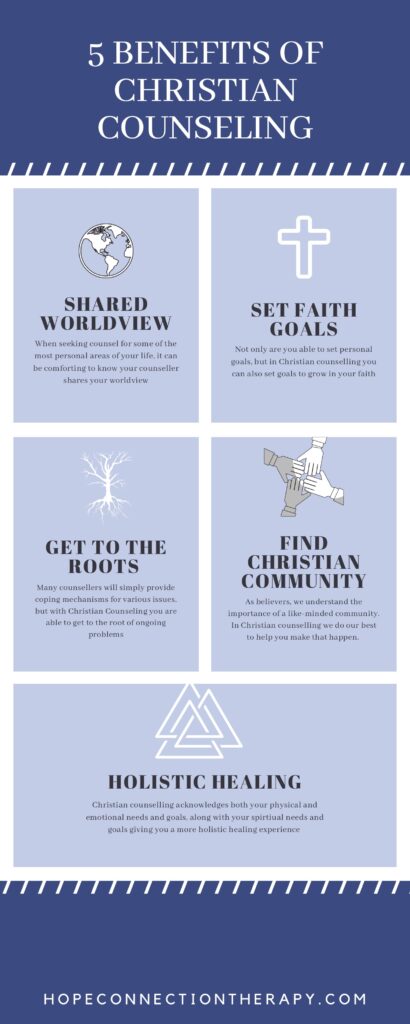
When seeking out counseling or therapy services, it can be difficult to know where to start. While therapy is very rewarding, it also can be a vulnerable process making it important to feel safe and understood. If you are a person of faith, there is the additional aspect of knowing that your faith will be validated and understood, and that any advice or insight you receive will be compatible with your worldview. That is why when seeking out counseling or therapy services, it may be beneficial to consider the possibility of Christian counseling.
1. Shared Worldview
As a Christian pursuing counseling services, you may feel comforted by working with a firm and counselor that share your worldview. Much of counseling deals with many intimate life issues such as marriage and family relationships, sexuality, and healing from past hurts. While there are general ways to deal with all of these that are considered healthy, these do not always address the perspectives and responses to these things may vary depending on your faith. In traditional counseling services you may learn some healthy coping mechanisms and tools to deal with life’s big issues, but with Christian counseling not only will you learn healthy responses, but you also can find advice and counsel that also honors your Christian values and benefit your spiritual health.
.
2. Setting Faith Goals
A big part of counseling is also problem solving and goal setting. Within a traditional counseling service you may set goals that relate to your personal behavior or relationships with others. But within Christian counseling, you also have the opportunity to also set faith goals. Christian counseling services does not eliminate other important goals you should make in your life, but rather it includes other spiritual steps that you can take to help to face a problem.
3. Getting to the Root of the Problem
In Christian counseling, not only will you be able to look into the emotional, mental, and relational aspects of your life, but you will also be able to explore the spiritual side of these facets. With this, you will be able to not only learn to manage certain aspects of your life well, but you will be able to dig into the roots of various problems. By including a spiritual perspective in this, you can glean a bigger view of these roots and discover even more healing.
4. Finding and Cultivating Christian Community
The great thing about working with a Christian counseling service, is that it will not only help you have better mental, emotional, and spiritual health personally, but it will also help you have and create healthier relationships. Many Christian counselors, including ourselves will encourage you to seek out healthy faith communities so that you can experience encouragement and support on many fronts. When rooted in positive Christian community, you may experience greater rewards in your healing process.
5. Holistic Healing
Finally, as Christian counselors, we acknowledge the reality that healing is multi-dimensional. Meaning, that it involves your physical, mental/emotional, and your spiritual health. If you choose Christian Counseling you will be able to address any issues from all of these fronts and find the healing you are looking for.